
Harder in practice. Easier in the game.
Why training
balls?
Because the ball you drill with should ask more of you than the ball you play with. Three ideas: see more, load more, aim smaller.
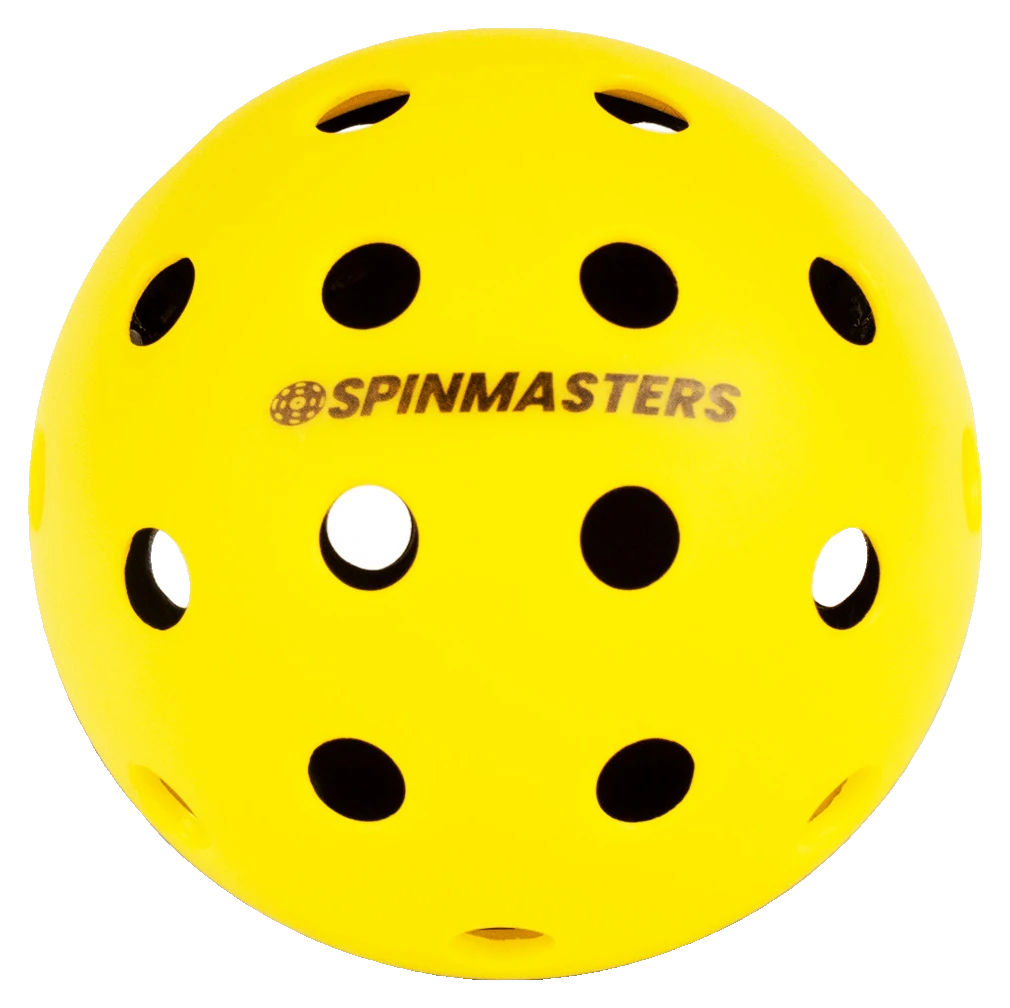
See it
Two-tone balls cut the noise and make spin readable.
Cognitive load
Too much to watch.
- The score
- Your partner
- Their feet
- The wind
- The last point
- The next court over
- The ball
A rally throws more at you than you can process. Your attention is limited, and every extra thing you track takes some of it.
That is cognitive load. When it runs high, players stop watching the ball and start guessing. They react to where they think it is going instead of what it is actually doing.
Our two-tone training balls are built to cut through the overload. Black against yellow gives your eyes one high-contrast thing to lock onto, so the extra information fades and the ball gets your full attention.
Read it before it bounces
The ball tells you everything.
On a one color ball, spin is close to invisible. With two hemispheres, the rotation shows up as a moving edge between black and yellow. Slice, topspin, sidespin: you see which way it is turning and how fast, and you can set your feet and paddle before the bounce.
Ball travel
Topspin
The top color rolls forward, toward the net. Expect the ball to dip and kick through.
Ball travel
Slice
The top color rolls back toward the hitter. Expect the ball to float, then stay low.
Ball travel
One color ball
Same topspin, far less to see. Your eyes get the flight, but not the rotation.
Load it
A heavier ball makes your grip adjust, then adapt.
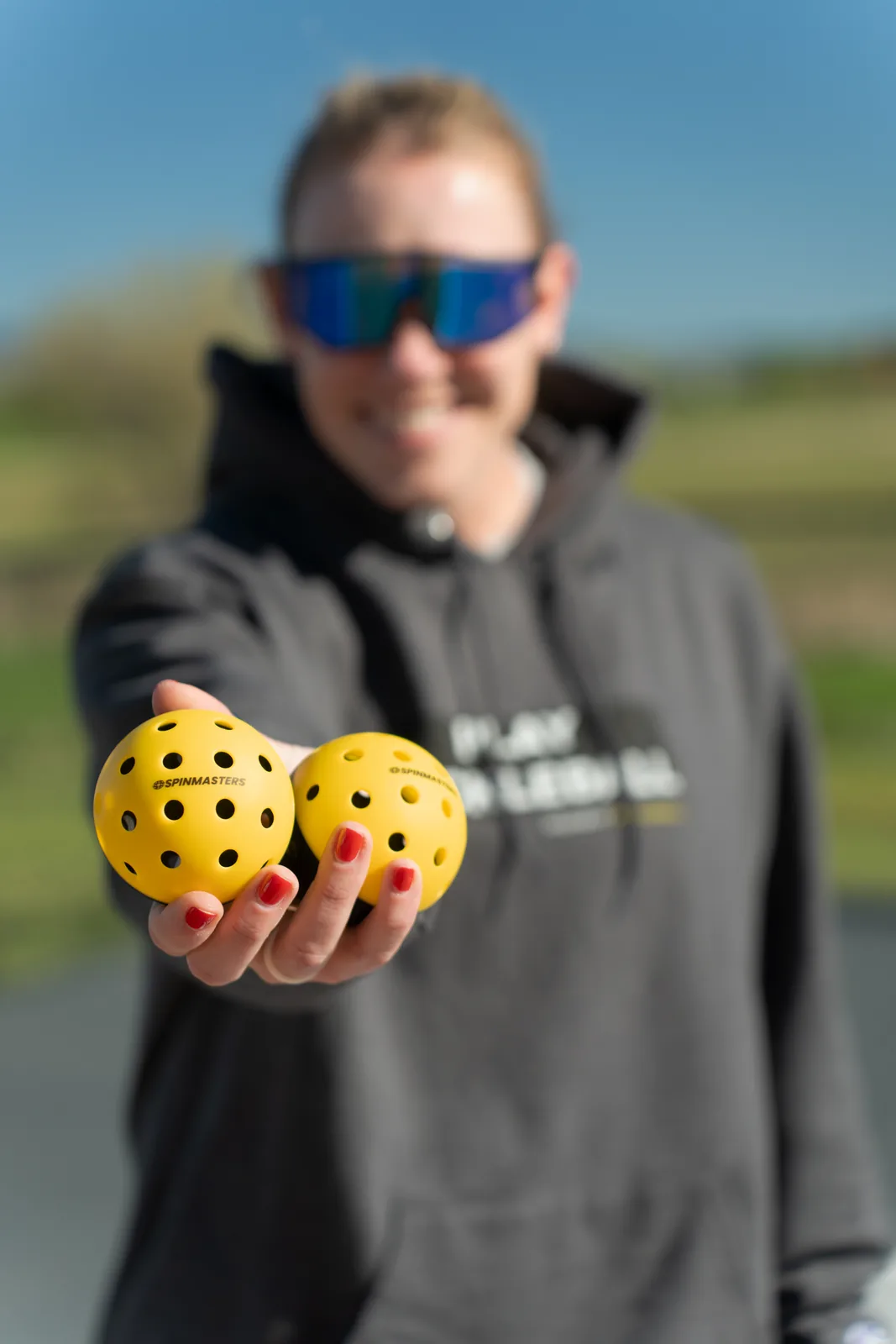
Spinmasters: heavier by design
31gvs 26 to 28g for a regular ball
Weight that
trains your grip.
Spinmasters weigh about 31 grams. A regular game ball like the Lifetime LT Pro 48 or the Franklin X-44 weighs 26 to 28. That is up to 5 grams more in your hand at contact, and your grip answers by holding the paddle tighter than it would with a standard ball.
That is the point. The added load makes you adjust, and adjusting is what builds adaptability. Go back to a regular ball and your grip has to recalibrate again, in small, fine corrections that carry straight into match play.
Borrowed from the rink
Hockey figured
this out first.
Hockey players have trained their hands this way for years. Off the ice they work with weighted training pucks and stickhandling balls: heavier ones to build wrist and forearm strength, lighter ones for hand speed.
The real gain comes from switching weights inside one session. After the heavy puck, the game puck feels natural and easy to control. Players call the result soft hands.
Spinmasters bring the same idea to pickleball. Load the hand, switch back, and let your touch catch up.
What the research found
- +13%
- wrist shot speed
- +14%
- shooting accuracy
- +8.7%
- handgrip strength, bottom hand
From a 12 week study of 16 youth ice hockey players who alternated light and heavy (260 gram) pucks. Heavy puck training raised shot speed more than light puck training. It is a hockey study, not a pickleball one, and we share it for the principle. Novak et al., Journal of Human Kinetics, 2022. Read the study
Shrink it
A smaller target in practice makes the game look big.
Small target training
Train small.
Play big.
Shrink the target in practice and everything looks bigger in the game.
A smaller ball leaves less room for error. Your eyes have to track more precisely, and your hands have to find the center of the paddle every time. Miss it and you know at once.
Then you step back up. The regulation ball looks large, and the contact you had to fight for in practice comes easily.
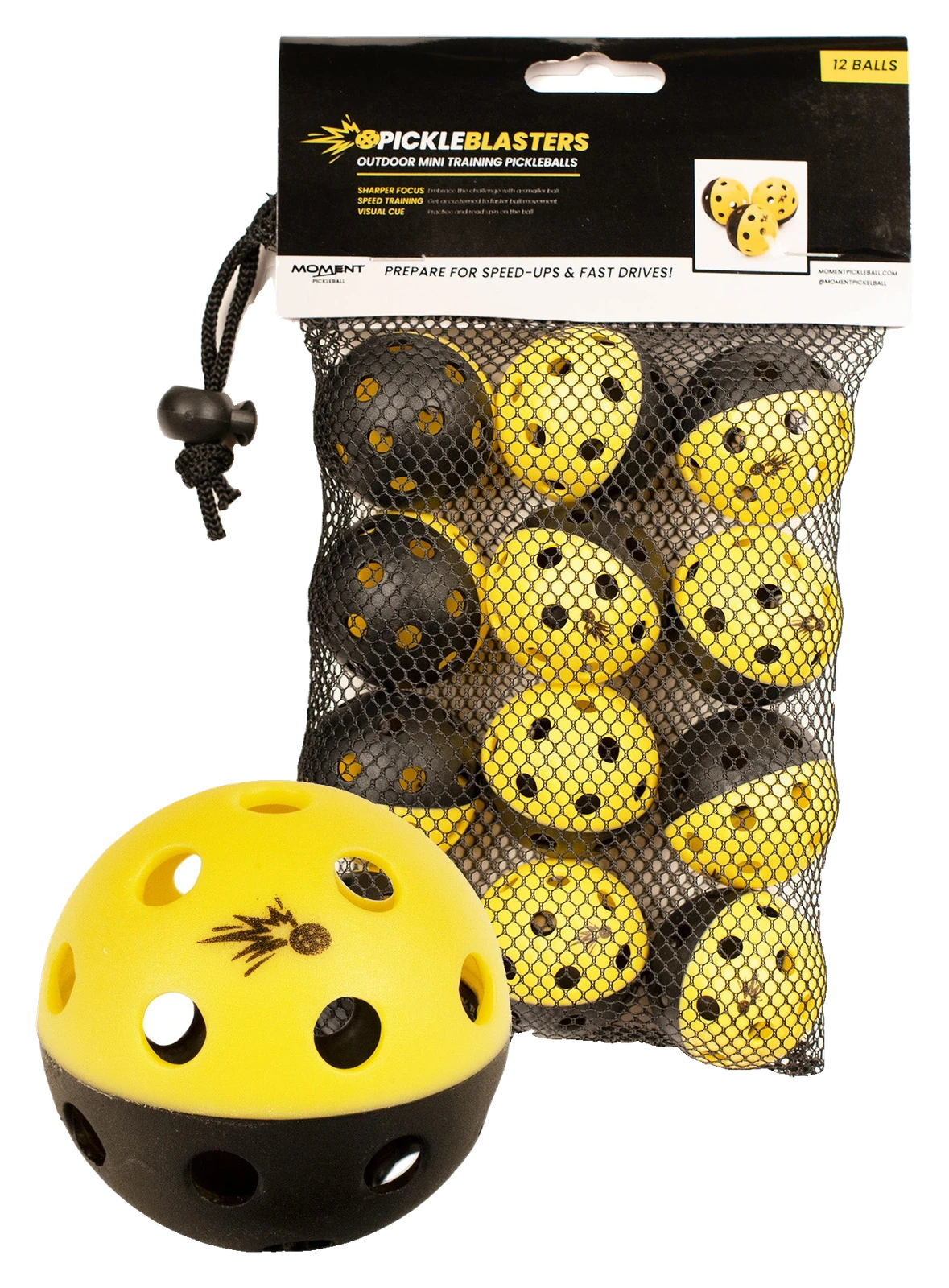
Mini plastic ball
Pickleblasters
Two-tone mini balls for indoor and outdoor work. Small and fast, built for speed ups and quick exchanges at the net.
See it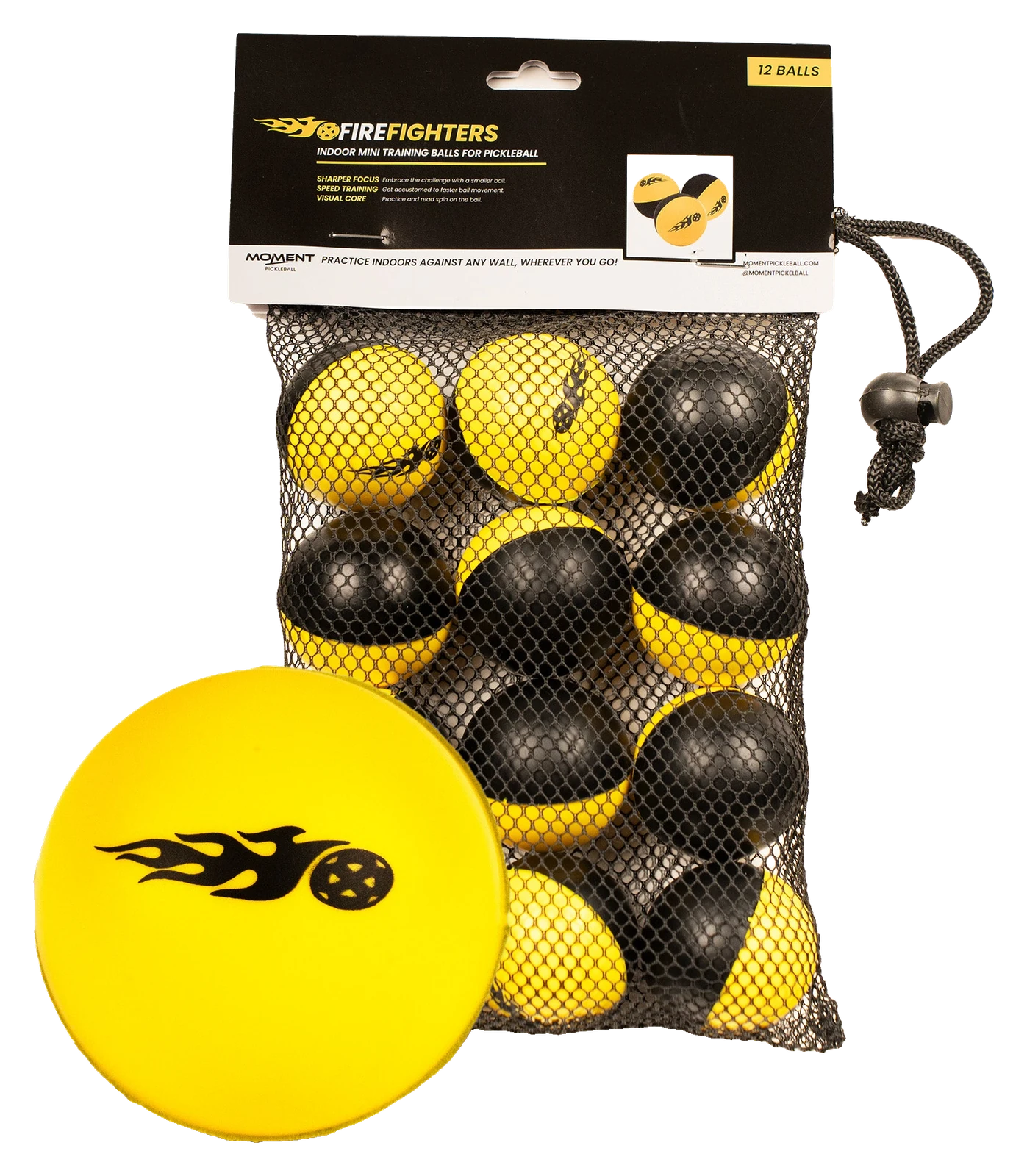
Mini foam ball
Firefighters
Two-tone mini foam balls for indoor practice. Quiet enough for the garage, quick enough to sharpen your hands for kitchen firefights.
See itShrink the paddle too
Why a mini paddle?
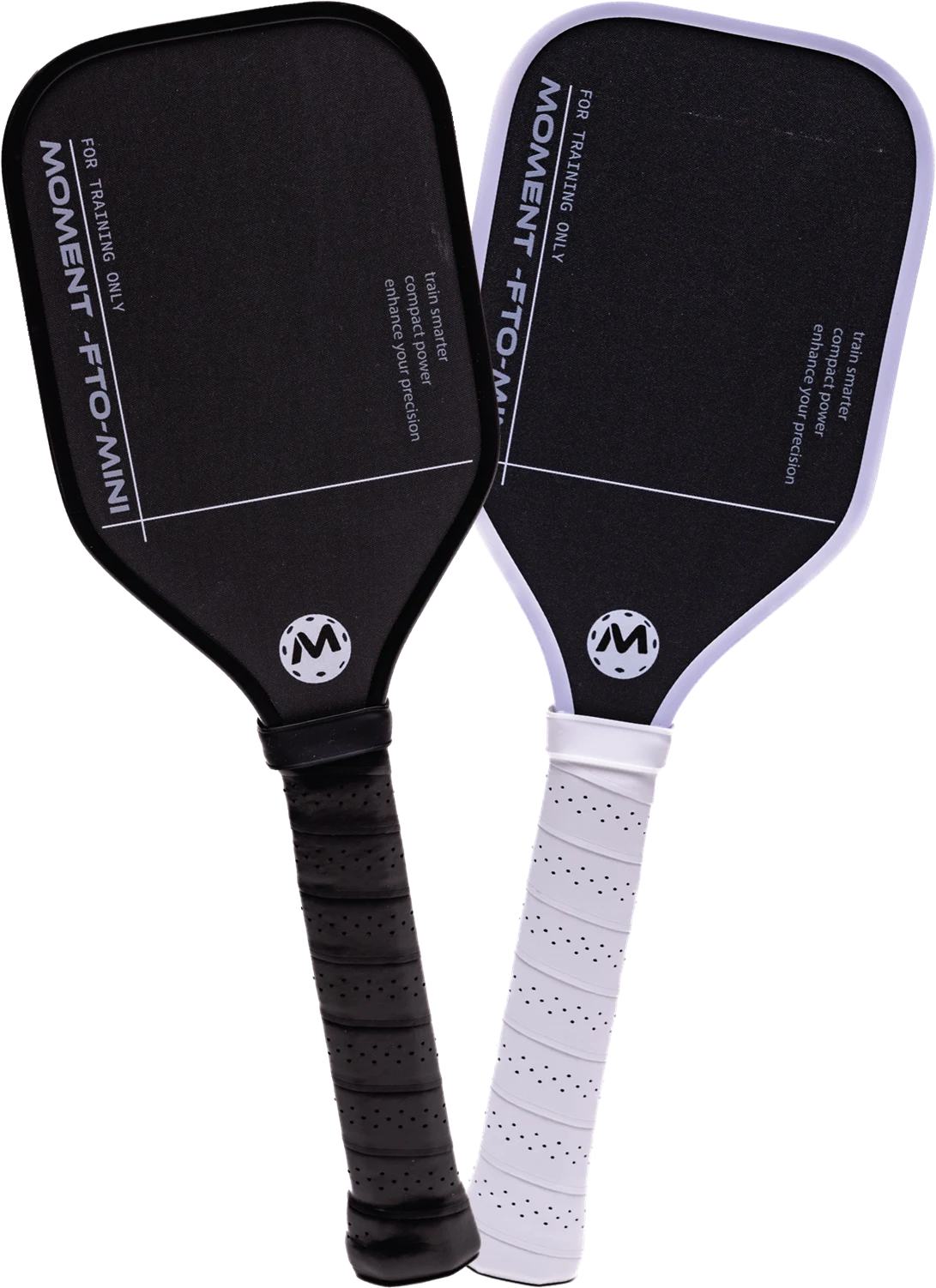
The FTO-Mini applies the same idea to the other side of contact: a face the size of the sweet spot.
 Read why
Borrowed from the diamond
Baseball players
have known for years.
Baseball and softball hitters take practice swings at balls the size of a golf ball, sometimes with a thin training bat. Tracking and squaring up something that small sharpens focus and hand to eye coordination.
Then they step in against a regulation ball, and it looks easy to see and easy to hit. Our mini balls do the same job for your dinks, volleys and resets.
How to use them
Mix them in.
These are training tools. They are made for drilling, interspersed with your regular balls, so you are always switching between the two and never settling into one feel.
Load
Drill with the training tool. Heavier, smaller or two-tone, it asks more of your eyes and hands than a game ball does.
Switch
Mix your regular game balls back in. Nothing else changes: same drill, same partner, same targets.
Adapt
Your eyes and hands make the fine adjustments on their own. That adjustment is the skill, and it carries into match play.
Train your eyes and your hands


